AWIQLI 2100 UNIT / 3 ML
INSULIN ICODEC : 2100 UNIT / 3 ML · DIN 02546221 · NOVO NORDISK CANADA INC
Health Canada status: MARKETED
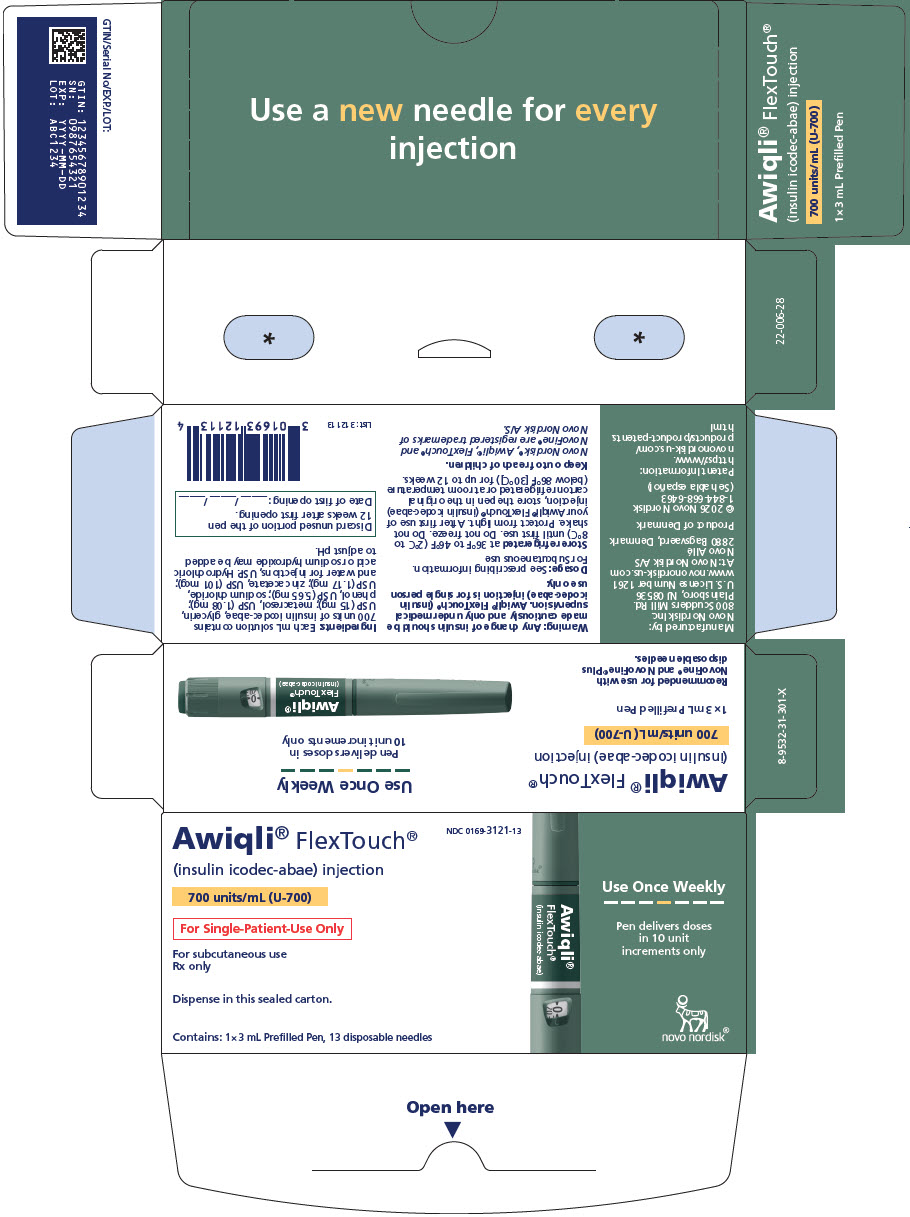
What is AWIQLI?
AWIQLI 2100 UNIT / 3 ML contains INSULIN ICODEC : 2100 UNIT / 3 ML. It is listed in the Health Canada Drug Product Database under DIN 02546221, held by NOVO NORDISK CANADA INC, supplied as SOLUTION for SUBCUTANEOUS administration. Health Canada currently lists it as marketed, status dated 13-Jun-2024. Nexara Health is a licensed Canadian wholesale distributor (DEL 3-002896-A) and can source this product for hospitals, pharmacies and clinics. Availability and lead time are confirmed per order.
What is AWIQLI used for?
AWIQLI® (insulin icodec injection) is indicated for the once-weekly treatment of adults with diabetes mellitus to improve glycemic control. In type 2 diabetes, AWIQLI® may be used along with tablets or injections for diabetes - including short or rapid-acting insulins. In type 1 diabetes, AWIQLI® must always be used along with short or rapid-acting insulins.
Authorized indication as written in the Health Canada product monograph. For healthcare professionals and licensed purchasers; this is not medical advice.
Product details and regulatory record
| DIN | 02546221 |
|---|---|
| Brand name | AWIQLI |
| Generic / active ingredient | INSULIN ICODEC : 2100 UNIT / 3 ML |
| Manufacturer | NOVO NORDISK CANADA INC |
| Strength | 2100 UNIT / 3 ML |
| Dosage form | SOLUTION |
| Route of administration | SUBCUTANEOUS |
| Schedule | Schedule D |
| ATC code | A10AE07 INSULIN ICODEC |
| Biosimilar | No |
| Health Canada status | MARKETED |
| Status date | 13-Jun-2024 |
How is it administered?
AWIQLI® is available as a single-patient use FlexTouch® pen. The pre-filled FlexTouch® pen delivers doses in 10 units increments and can deliver up to 700 units in a single injection. Inject AWIQLI® subcutaneously once-weekly on any day of the week but preferably the same day each week. It may be administered at any time during the day. Individualize and titrate the dose of AWIQLI® based on the patient's metabolic needs, blood glucose monitoring results, and glycemic control goal. The potency of insulin analogues, including insulin icodec is expressed in units (U). One (1) unit (U) of insulin icodec corresponds to 1 international unit (IU) of human insulin. Dose adjustments may be needed with changes in renal or hepatic function or during illness to minimize the risk of hypoglycemia or hyperglycemia. Due to the long half-life of insulin icodec, adjustment of dose is not advised during acute illness nor if patients make short-term changes in their physical activity level or usual diet. In patients with type 2 diabetes mellitus, AWIQLI® can be used in combination with oral antidiabetic agents (OADs). In patients with type 1 diabetes, AWIQLI® must be used in regimens containing rapid-acting or short-acting insulin to cover mealtime insulin requirements. Blood glucose monitoring is recommended for all patients with diabetes. AWIQLI® must not be used for the treatment of diabetic ketoacidosis. AWIQLI® must not be administered via intravenous infusion or intramuscular injection. When switching from previous daily basal insulin to once weekly AWIQLI®, close glucose monitoring is recommended. The first weekly dose of AWIQLI® should be taken on the day following the last dose of once- or twice-daily basal insulin. When switching patients from once- or twice-daily basal insulin, the corresponding weekly AWIQLI® dose is the previous daily basal insulin dose multiplied by 7, rounded to the nearest 10 units. Subsequent doses can be titrated based on metabolic needs, blood glucose monitoring results, and glycemic control goal. For patients requiring a one-time additional dose (Week 1 only), 1.5 x (previous daily basal insulin dose x 7), rounded to the nearest 10 units, may be administered. The one-time additional dose must not be added for the second injection onwards. The second once-weekly dose of AWIQLI® is the total daily basal dose multiplied by 7, rounded to the nearest 10 units. The third and subsequent doses can be titrated based on the patient's metabolic needs, blood glucose monitoring results, and glycemic control goal. If a dose is missed, it is recommended that it is administered as soon as possible. Patients can resume dosing on their regular dosing day as long as there are minimum 4 days between two consecutive doses, otherwise patients must be instructed to continue their dosing once weekly on the new day. Monitoring of fasting blood glucose is recommended. Inject AWIQLI® subcutaneously into the thigh, upper arm, or abdomen. Rotate injection sites within the same region from one injection to the next to reduce the risk of lipodystrophy and localized cutaneous amyloidosis. Do not inject into areas of lipodystrophy or localized cutaneous amyloidosis. During changes to a patient's insulin regimen, increase the frequency of blood glucose monitoring. Use AWIQLI® pen with caution in patients with visual impairment that may rely on audible clicks to dial their dose. DO NOT administer AWIQLI® intramuscularly, intravenously or in an insulin infusion pump. DO NOT dilute or mix AWIQLI® with any other insulin or solution. DO NOT transfer AWIQLI® from the AWIQLI® pen into a syringe for administration.
Included because it drives pack selection and wastage. Consult the monograph.
How is it stored and handled?
Recommended Storage: Dispense in the original sealed carton with the enclosed Instructions for Use. Do not store in the freezer or directly adjacent to the refrigerator cooling element. Do not freeze. Do not use AWIQLI® if it has been frozen. Before first use: Store in a refrigerator (2 °C to 8 °C). Keep away from the freezing element. Keep the cap on the pen in order to protect it from light. After first opening or if carried as a spare: You can carry your AWIQLI® pre-filled pen (FlexTouch®) with you and keep it at room temperature (below 30 °C) or in a refrigerator (2 °C to 8 °C) for up to 12 weeks. Always keep the cap on the pen when you are not using it in order to protect it from light. Do not throw away any medicines via wastewater or household waste. Ask your pharmacist how to throw away medicines you no longer use. Keep out of reach and sight of children. Do not leave the pen in a car or other place where it can get too hot or too cold. Avoid exposing AWIQLI® to direct sunlight. Keep AWIQLI® away from heat, microwaves and out of the light. Do not drop your pen or knock it against hard surfaces. Do not try to repair your pen or pull it apart. Do not expose your pen to dust, dirt, or liquid. Do not wash, soak, or lubricate your pen. If necessary, it may be cleaned with a mild detergent on a moistened cloth.
How is it supplied?
Solution for Injection in the FlexTouch® pre-filled pen, 700 units/mL. Available in 1 mL (700 units), 1.5 mL (1050 units), and 3 mL (2100 units) pre-filled pens. Pack size of 1 pen/pack. The 1.0 mL pen is only available as a Sample pack. Packaging consists of a cartridge (Type I glass) with a plunger (halobutyl) and a laminated rubber sheet (halobutyl/polyisoprene) contained in a pre-filled multidose disposable pen made of polypropylene, polyoxymethylene, polycarbonate and acrylonitrile butadiene styrene.
Contraindications
AWIQLI® is contraindicated during episodes of hypoglycemia. It is also contraindicated in patients who are hypersensitive to this drug or to any ingredient in the formulation, including any non-medicinal ingredient, or component of the container. AWIQLI® should not be used in patients with a history of hypoglycemia unawareness. AWIQLI® must not be used in combination with other long-acting (basal) insulins (e.g., insulin detemir, insulin glargine, or insulin degludec).
Warnings and precautions
Hypoglycemia is the most common adverse effect of insulin products including AWIQLI®. As with all insulin products the timing of hypoglycemia may differ. Glucose monitoring shall be performed for all patients with diabetes mellitus treated with insulin. Uncorrected hypoglycemic or hyperglycemic reactions can cause loss of consciousness, coma, and, or death. Switching a patient between another type, brand or manufacturer of insulin and AWIQLI® should be done under medical supervision and may result in the need for a change in dosage. Changes in insulin regimen from other insulins to AWIQLI® may result in increased risk of hypoglycemia or hyperglycemia. AWIQLI® must not be administered more frequently than once a week. Medication errors have been reported in which patients accidentally administer short-acting insulin instead of basal (long-acting) insulin. Specific attention should be paid when switching from a daily basal insulin to AWIQLI®, which is administered weekly. Inspect AWIQLI® visually prior to administration and use only if the solution appears clear and colourless. Never mix AWIQLI® with any other insulin. AWIQLI® must not be used in combination with other long-acting (basal) insulins (e.g., insulin detemir, insulin glargine, or insulin degludec). Never administer AWIQLI® by intramuscular (IM) injection, intravenously (IV), or with an insulin infusion pump. Never Share a AWIQLI® FlexTouch® Pen, or Needle Between Patients. Sharing poses a risk for transmission of blood-borne pathogens. Stress or concomitant illness, especially infectious and febrile conditions, may change insulin requirements. The early warning symptoms of hypoglycemia may be changed, be less pronounced, or absent when transferring to AWIQLI®. Risk of hypoglycemia is increased on Days 2-4 of the weekly AWIQLI® dosing cycle. Patients who are blind or have poor vision must be instructed to always get help/assistance from another person who has good vision and is trained in using the pre-filled pen. To avoid dosing errors and potential overdose, patients and healthcare professionals should never use a syringe to draw the medicinal product from the cartridge in the pre-filled pen. Thiazolidinediones (TZDs) in combination with insulin can cause dose related fluid retention, which may lead to or exacerbate congestive heart failure. Patients treated with insulin, including AWIQLI® and a PPAR-gamma agonist should be observed for signs and symptoms of congestive heart failure. If congestive heart failure develops, it should be managed according to current standards of care and discontinuation or dose reduction of the PPAR-gamma agonist must be considered. The patient's ability to concentrate and react may be impaired as a result of hypoglycemia or hyperglycemia or, for example, as a result of visual impairment. This may constitute a risk in situations where these abilities are of special importance (e.g., driving a car or operating machinery). Patients should be advised to take precautions to avoid hypoglycemia while driving. This is particularly important in those who have reduced or absent awareness of the warning symptoms of hypoglycemia or have frequent episodes of hypoglycemia. It should be considered whether it is advisable to drive or operate machinery in these circumstances. Changes in an insulin regimen (e.g., insulin strength, manufacturer, type, injection site or method of administration) may affect glycemic control and predispose to hypoglycemia or hyperglycemia. Make any changes to a patient's insulin regimen under close medical supervision with increased frequency of blood glucose monitoring. Severe hypoglycemia can cause seizures, may be life-threatening or cause death. Prolonged or severe hypoglycemic attacks, especially if recurrent, may lead to neurological damage, loss of consciousness, coma, or death. As with all insulins, additional caution (including intensified blood glucose monitoring) should be exercised in patient populations who are
What can be used instead?
Other Canadian products sharing ATC code A10AE07 INSULIN ICODEC. 3 of 3 DINs in this group are currently marketed — marketed products are listed first, because that is what can actually be bought. These tables describe supply, not clinical equivalence: substitution rests with the prescriber or pharmacist, and interchangeability is determined provincially.
| Product | Strength | Form | Manufacturer | Health Canada status | DIN |
|---|---|---|---|---|---|
| AWIQLI | 1050 UNIT / 1.5 ML | SOLUTION | NOVO NORDISK CANADA INC | MARKETED | DIN 02546213 |
| AWIQLI | 700 UNIT | SOLUTION | NOVO NORDISK CANADA INC | MARKETED | DIN 02546205 |
Who else supplies INSULIN ICODEC worldwide?
Nexara tracks national medicine registries and published price lists across multiple markets. INSULIN ICODEC appears in 441 registered pack listings across 11 markets, published on 9 different national price bases. Where a Canadian route is closed, that is where an alternative route of supply starts — subject to the import rules in both countries.
Registered listings are not stock. Ask us to confirm what can actually be sourced for your order.
How can I get it?
Nexara Health supplies this product to licensed Canadian buyers — pharmacies, hospitals, clinics, licensed distributors, and clinical trial sponsors or their CROs. We confirm stock, pack size, expiry and pricing at the time of quotation. If the product is on backorder or in shortage, we identify equivalent alternatives and import options where permitted.
Ordering questions
Who can buy this from Nexara?
Licensed entities only. Nexara holds Health Canada establishment licence DEL 3-002896-A and ships only to a licensed address.
Is there a minimum order?
Yes, set per product line and per pack multiple rather than on the order total, so you are never asked to buy a part-pack. The minimum for this line is confirmed with your quote.
What is the lead time?
Confirmed per order at quotation, and it depends on current stock position and whether the product is in shortage.
Can Nexara supply this for a clinical trial?
Yes — comparator and background-therapy supply, including sourcing from other markets where a Canadian pack will not satisfy the protocol. Clinical trial supply.